
How I Work
I hold a Postgraduate Diploma in Person-Centred Counselling from the University of Aberdeen, alongside an Advanced Diploma in Mental Health and Wellbeing Coaching from Kingstown University. My training supports an integrative way of working that recognises the whole person; emotional, relational, cognitive, and embodied, combining therapeutic depth with practical, forward-focused support.
Working with the whole person means the importance of recognising that our thoughts, feelings, relationships, bodies, and life experiences are all connected. Therapy is shaped around you; your pace, your needs, and what feels most helpful
My professional experience includes working in a range of counselling settings, supporting adults with diverse life experiences and presenting concerns. I have worked as a Senior Counsellor within counselling and coaching services, as well as in staff and volunteer counselling roles, offering support that is responsive to each individual’s context, needs, and pace.
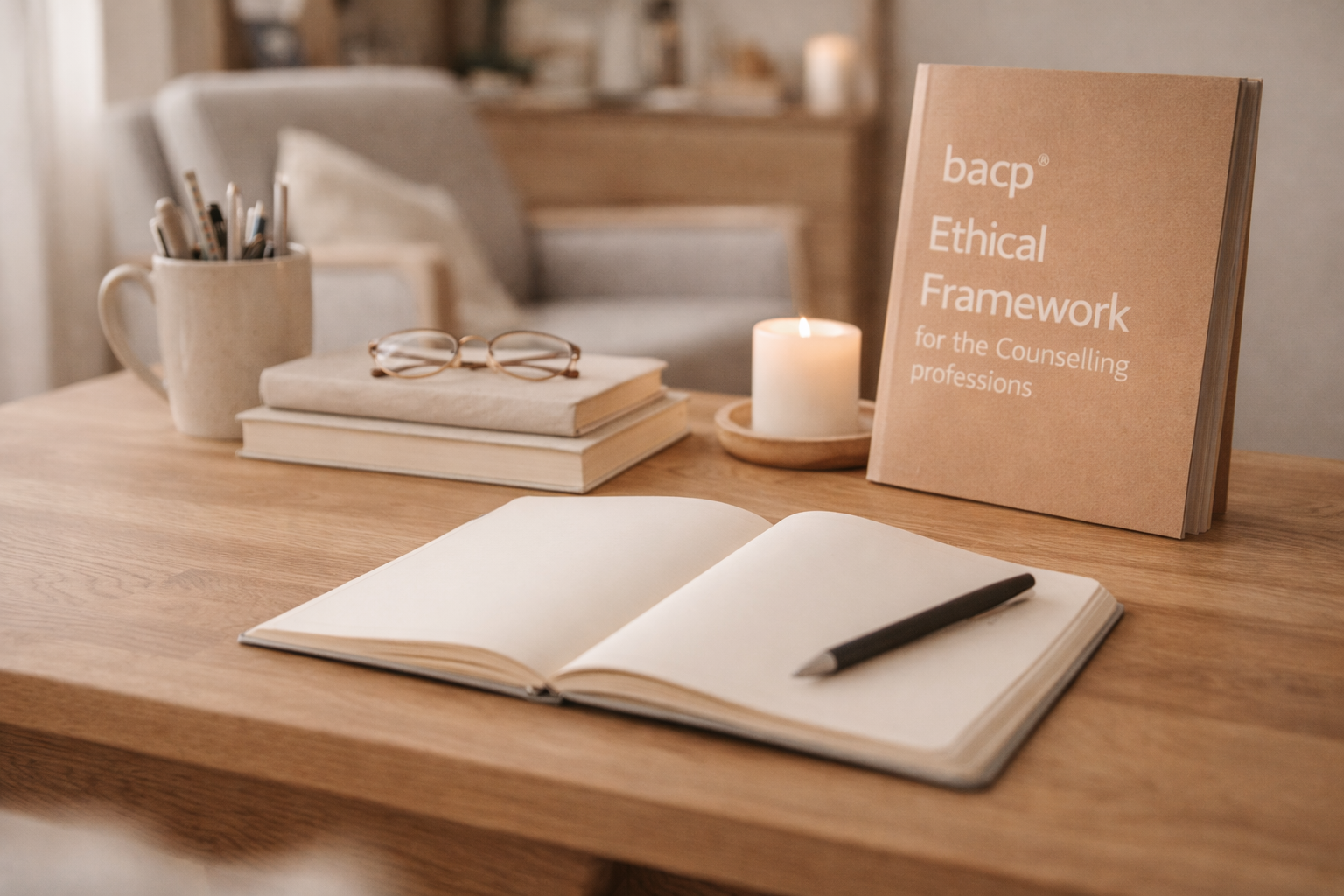
Alongside direct therapeutic work, my experience has included developing and maintaining ethical policies and procedures in line with the BACP Ethical Framework, designing and delivering counsellor training, and supporting the ongoing development of trainee and volunteer counsellors. This work reflects a strong commitment to ethical practice, reflective working, and the wider professional community.
I am committed to offering an inclusive and respectful space for people of all sexual orientations, gender identities, cultural backgrounds, and ethnicity. Therapy is offered as a place where you can bring your whole self, knowing that your experiences and identity are met with care and respect.
-
My work is integrative and shaped by ongoing professional training and clinical experience. At the core of my practice is person-centred counselling, supported by mental health and wellbeing coaching. This allows space for emotional depth and reflection, alongside practical support for change, decision-making, and moving forward.
-
A significant part of my work is informed by relational approaches, including attachment theory, Internal Family Systems (IFS), and ideas drawn from couples counselling theory.
I have a strong interest in how early relationships, attachment patterns, and lived experiences across different types of relationships, such as; family dynamics, romantic and sexual relationships, and friendships, and how they can influence how we feel, behave, and respond to others in our present relationships, particularly during times of stress or anxiety.
-
My practice is trauma-informed and guided by an understanding of how the nervous system responds to safety, stress, and perceived threat.
Drawing on concepts from polyvagal theory and PTSD-informed practice, therapy can support greater awareness of how these responses show up in everyday life.
Understanding anxiety, trauma responses, dissociation, and emotional overwhelm through the lens of the nervous system can help reduce self-blame and shame.
When these reactions are recognised as protective responses rather than personal failings, it becomes possible to develop greater self-compassion, regulation, and choice in how we respond to ourselves and others.
-
Alongside depth-focused work, I integrate practical and future-oriented approaches, including solution-focused work, cognitive and behavioural coaching, positive psychology, and visualisation or imagery techniques.
These can be particularly helpful when working with anxiety and chronic worry, confidence, decision-making, life transitions, and neurodevergent informed awareness.
-
I have experience and training in supporting people who are experiencing suicidal thoughts or engaging in self-harm. This work is approached with care, sensitivity, and a strong commitment to ethical, trauma-informed practice.
Therapy offers a safe and non-judgemental space where difficult thoughts and feelings can be spoken about openly and at a pace that feels manageable. Together, we can explore what may be contributing to these experiences, including emotional distress, coping strategies, and the impact of past or current stressors.
My practice is supported by clear safeguarding policies and procedures (can be found in my website footer), which help ensure that safety remains central to the work. Where appropriate, this may include thoughtful conversations around support networks, protective factors, and accessing additional help, always handled collaboratively and with respect for your autonomy.
-
Person-centred counselling
A collaborative, non-directive approach that values your lived experience and offers a respectful, supportive space to explore thoughts and feelings at your own pace.Mental health and wellbeing coaching
A supportive, goal-oriented approach that complements therapy by focusing on practical strategies, decision-making, confidence, and creating positive change in everyday life.Trauma-informed practice
An approach that recognises how trauma can affect emotions, behaviour, and the nervous system, and prioritises safety, choice, pacing, and emotional containment.Polyvagal-informed understanding
A way of making sense of how the nervous system responds to stress and perceived threat, helping to reduce shame and support regulation, self-compassion, and emotional safety.Attachment-informed work
An approach that explores how early and ongoing relationships shape how we relate to ourselves and others, particularly in the context of anxiety, closeness, boundaries, and emotional security.Internal Family Systems (IFS)-informed ideas
A compassionate framework that explores our internal protective parts of our ‘self’ and supports with curiosity and empathy rather than judgement, helping to build self-understanding and emotional balance.Relational and couples-informed perspectives
While I work with individuals rather than couples, ideas drawn from couples counselling and relational therapy can be helpful in exploring relationship patterns, communication, and emotional dynamics across different types of relationships.Solution-focused and coaching-informed work
Practical, future-focused approaches that support clarity, confidence, and navigating life transitions.Positive psychology-informed approaches
Ways of supporting wellbeing that focus on strengths, values, meaning, and what helps life feel more balanced and fulfilling, alongside therapeutic depth.